Educational games
Educational games are excellent tools for introducing computational thinking to early childhood and primary school students. These games are not only fun but also foster various fundamental skills and concepts of computational thinking, such as sequencing, decomposition, debugging, abstract thinking, logic, spatial orientation, problem-solving, creativity, and collaboration.
These skills are essential not only for programming but also for a wide range of academic disciplines and real-life situations, helping children think more critically and structurally. Their interactive and engaging nature makes learning both enjoyable and effective.
Some examples of educational games that develop computational thinking include:
CODY ROBY
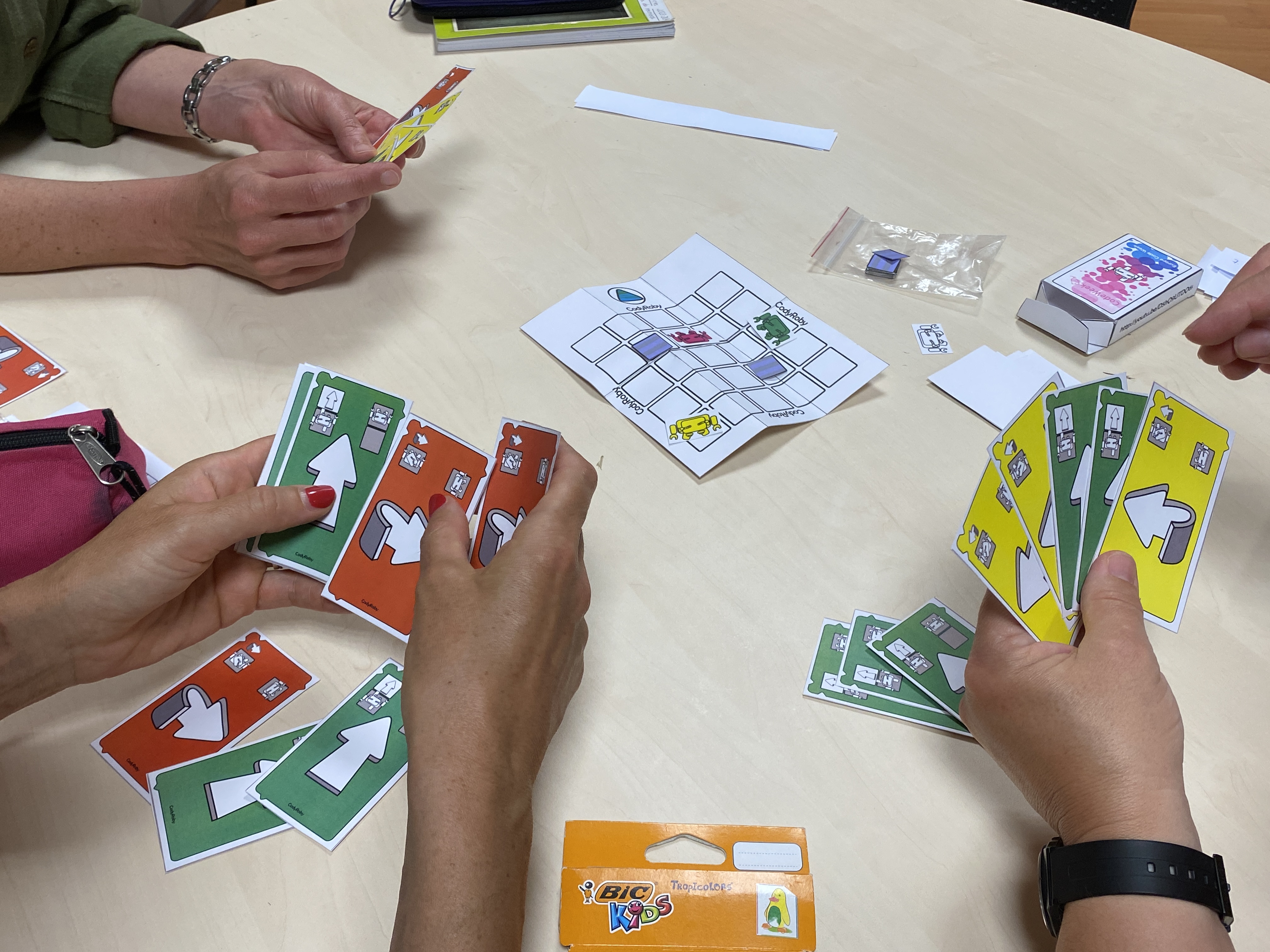
Cody Roby is the name of a set of DIY (do-it-yourself) games that provide an easy way to start playing with robots and programming at any age, without the need for computers, tablets, or mobile devices.
Roby is a robot that executes instructions, while Cody is a programmer who provides the instructions. These instructions are represented by cards. At the beginning, there are only three instructions: move forward, turn right, and turn left. During the game, Cody selects a card and passes it to Roby, who moves across the board according to the instruction on the card.
Material and didactic proposal for different stages
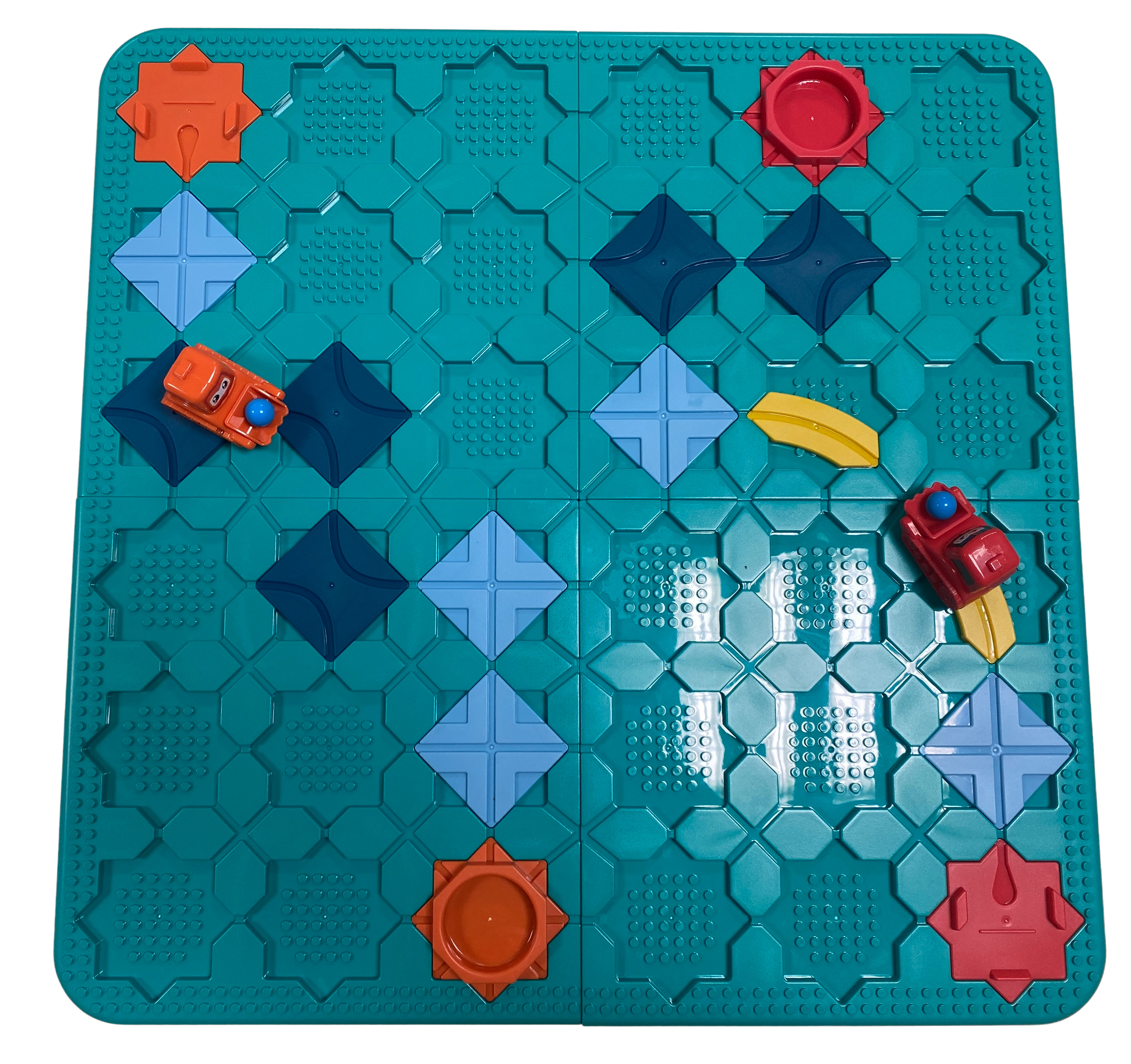
LOGICAL ROAD BUILDER
Educational game where children design a route using different track pieces to create a path from the start to the finish. Once the puzzle is solved, they place the ball in the car, which they roll backward, and it will follow the previously marked path.
It contains over 200 challenges and four difficulty levels.
Technical specifications:
- Manufacturer: burgkidz
- Age: 4 to 8 years
- Number of players: 1 or 2 players
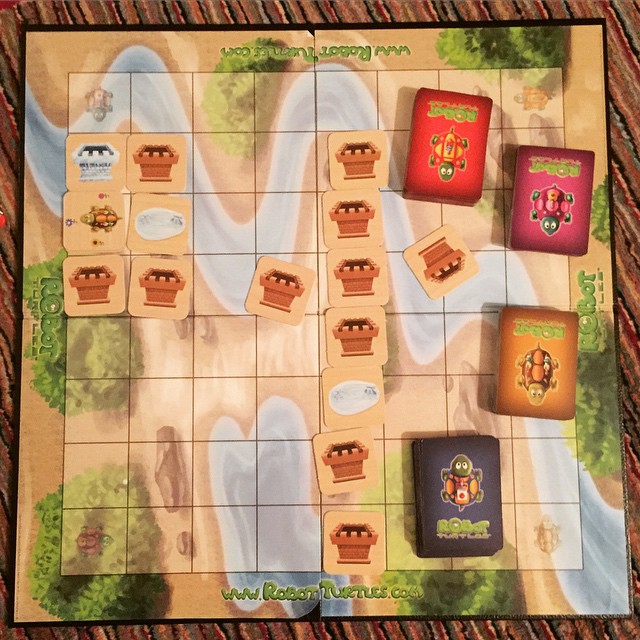
ROBOT TURTLES
Robot turtles is a board game for children aged 4 and up that introduces the fundamentals of programming. The game adapts to the child's age by unlocking new concepts as they gain mastery.
The goal for each player is to guide their turtle to reach the gem of their color by using movements and actions (code cards) on a map (board). It is not a competitive game—winning is not about being the first to arrive—nor is it cooperative, as players do not necessarily help each other. Instead, it is non-competitive, meaning all players must achieve their goal.
This game helps develop fine motor skills, spatial awareness, logical reasoning, computational thinking, self-monitoring, decision-making and responsibility, socialization, and tolerance to frustration.
Technical specifications:
- Manufacturer: Thinkfun
- Age: 4 to 7 years
- Number of players: 2-5
LET'S GO CODE
Let's go code is an unplugged programming game that provides a very basic introduction to programming from an early age. With this material, students can engage in activities that allow them to physically experience the movements they program to reach a goal.
This set of interactive activities introduces positional language and directions, reinforces computational thinking, activates critical thinking skills, develops gross motor skills, and promotes teamwork and cooperative play.
Technical specifications:
- Manufacturer: Learning Resources
- Age: 5 years and up
- Number of players: 2
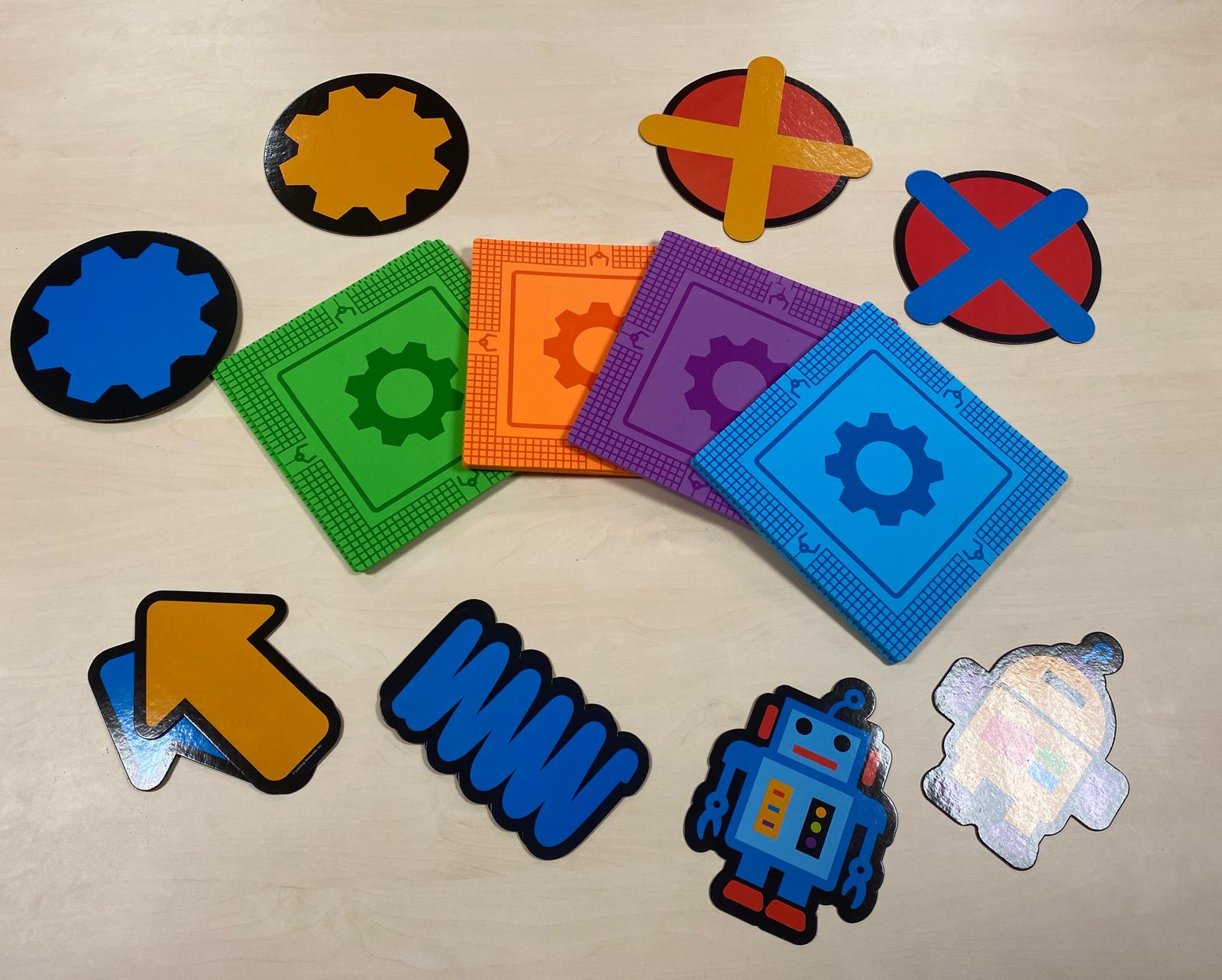
Card game Let's go code (alternative game)
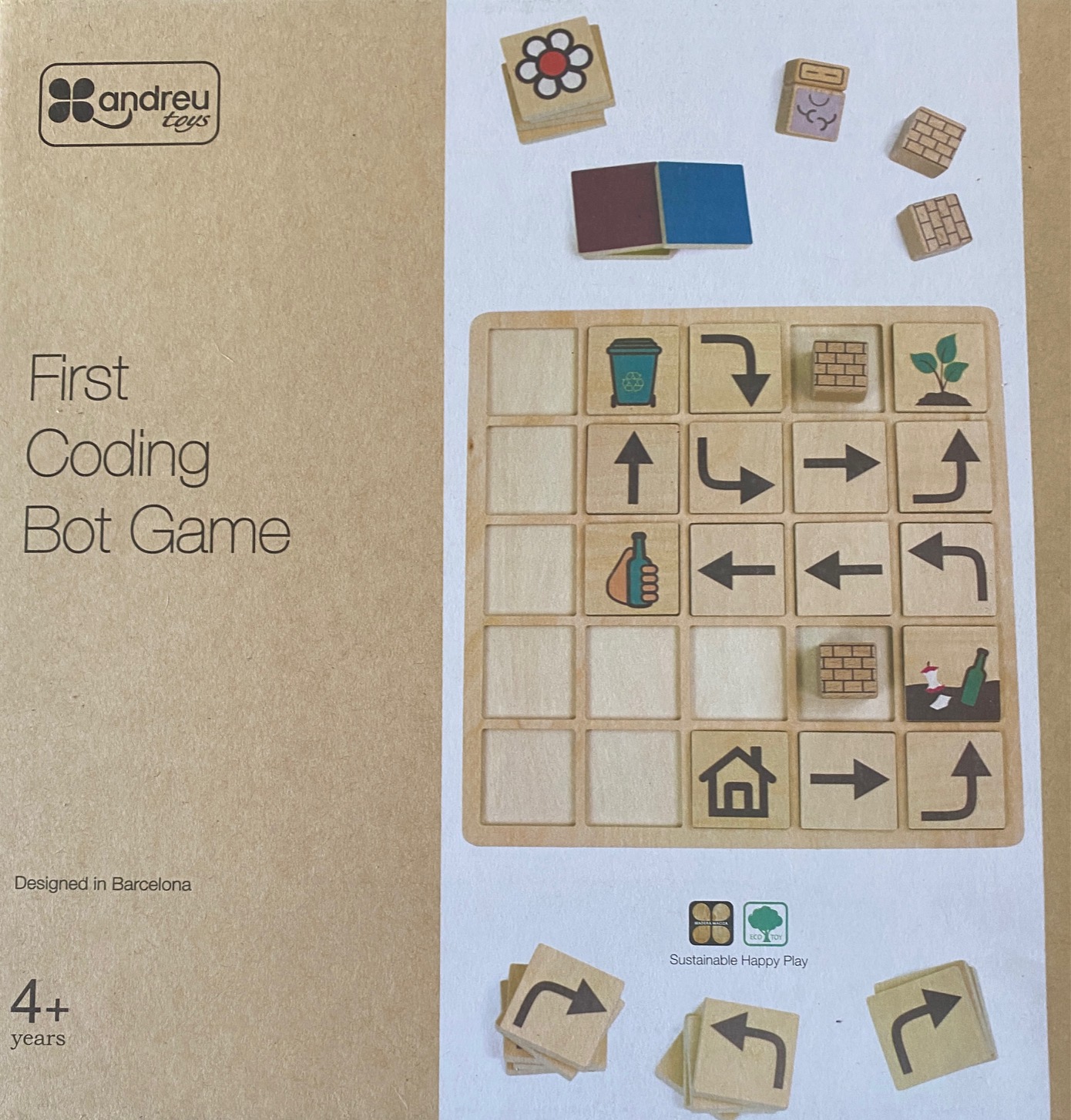
FIRST CODING BOT GAME
First coding bot game introduces the first steps of learning programming in a playful and fun way. Among other aspects, children will learn about directionality, sequencing, and problem-solving. It includes various materials, such as drawings with sequences to reach a specific goal, walls to make the path more challenging, and a little friend named Bot who will accompany us throughout the game.
Technical specifications:
Manufacturer: Andreu Toys
Age: 4 years and up
BITS & BITES
Coding card game is a card game that introduces computer science concepts such as algorithms and instruction sequences. In turn, players learn problem-solving skills while developing a logical mindset.
The objective of the game is to guide a character home while avoiding the villains.
Technical specifications:
- Manufacturer: Games 4 Learning
- Age: 4 years and up
- Number of players: 2 to 4 players
Demonstration of the game for one person
RIVER DRAGONS
Programming game for children aged 8 and up, where players build bridges with walkways of different sizes and stones to cross the river and reach the island on the other side.
Everyone plans simultaneously and then plays in turns. The player who has best anticipated the moves of others will gain advantages to move forward or take alternative paths.
Technical specifications:
- Manufacturer: Asmodee
- Age: 8 years and up
- Number of players: 2 to 6 players
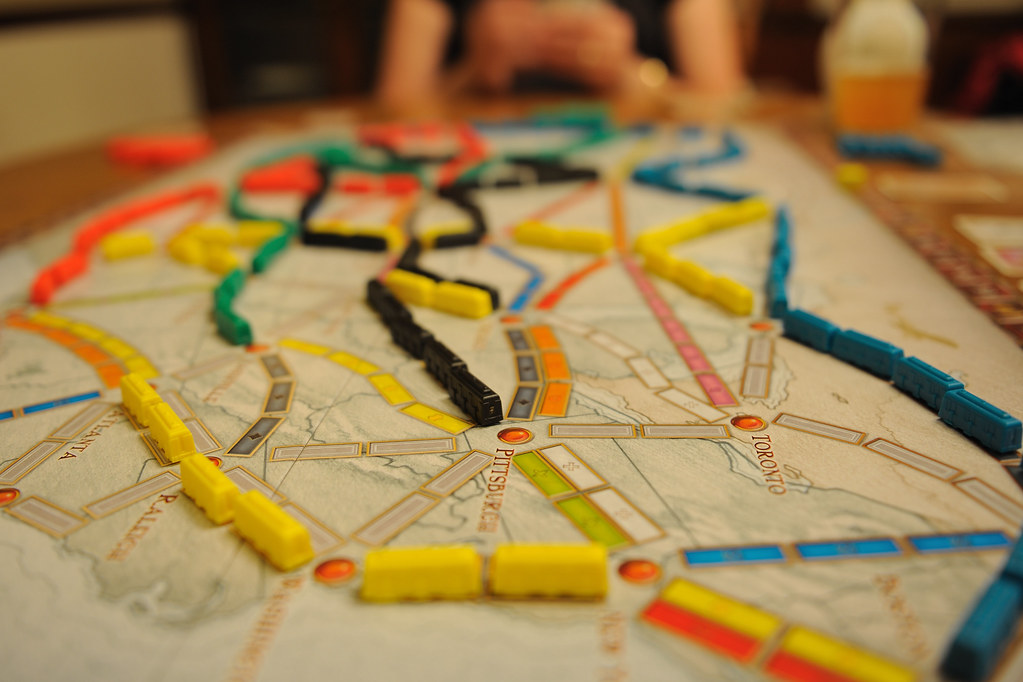
TICKET TO RIDE. FIRST JOURNEY
An adaptation of the game Ticket to ride, designed for a younger audience. The game consists of completing a series of objectives, which are full routes that can be divided into different stops or cities. It focuses on decomposition.
Technical specifications:
- Manufacturer: Asmodee
- Age: 6 years and up
- Number of players: 2 to 4 players
SET
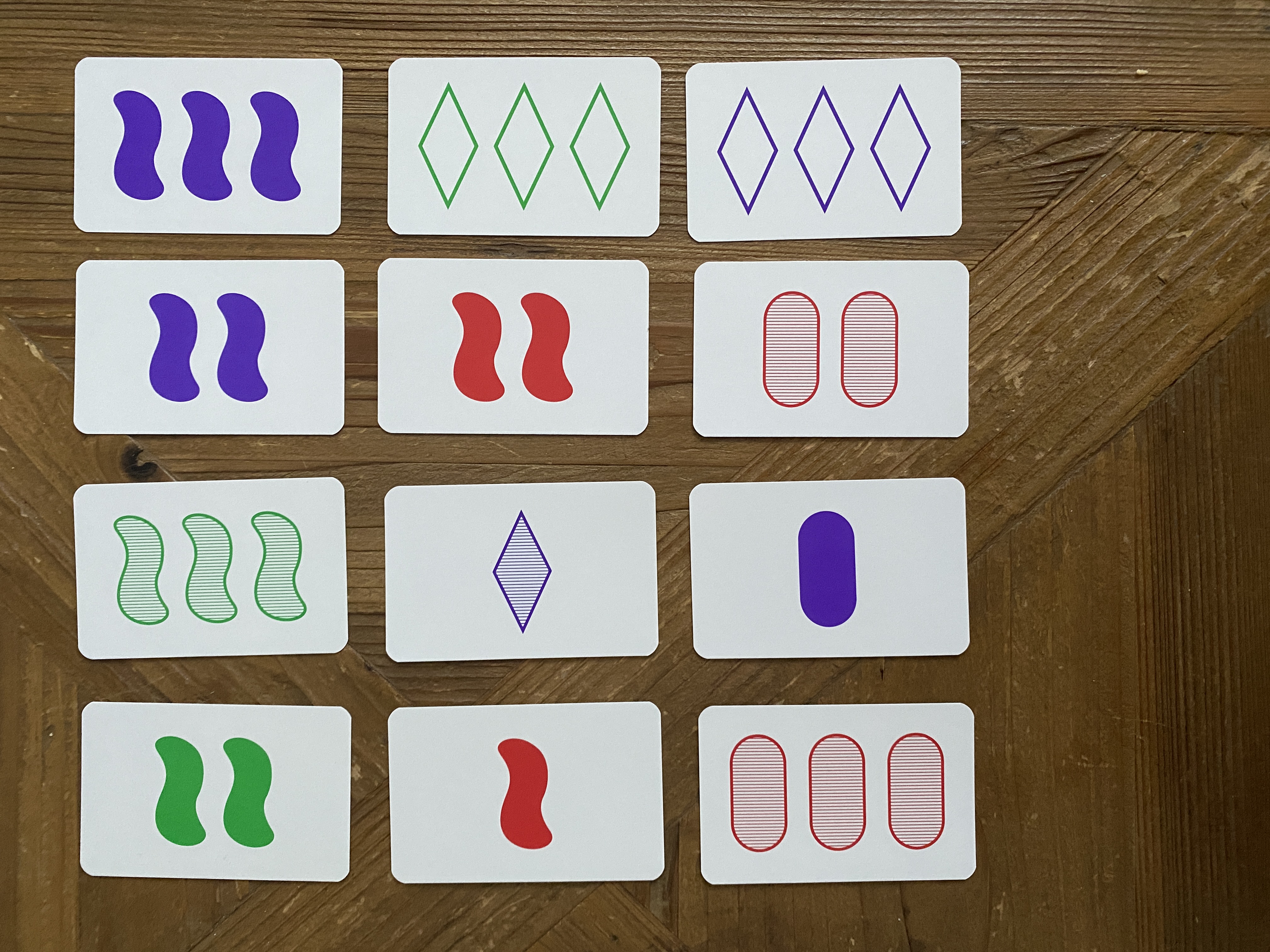
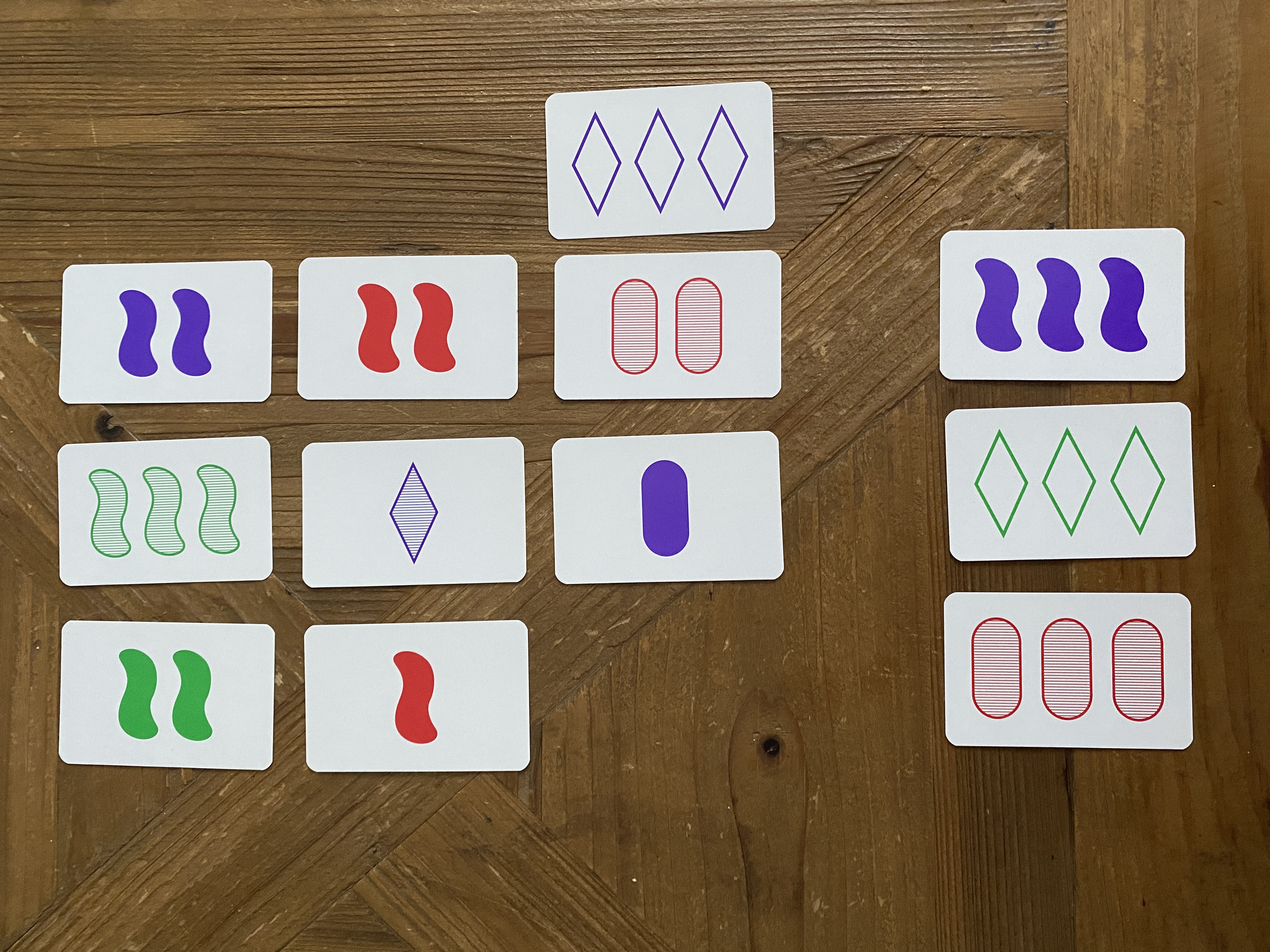
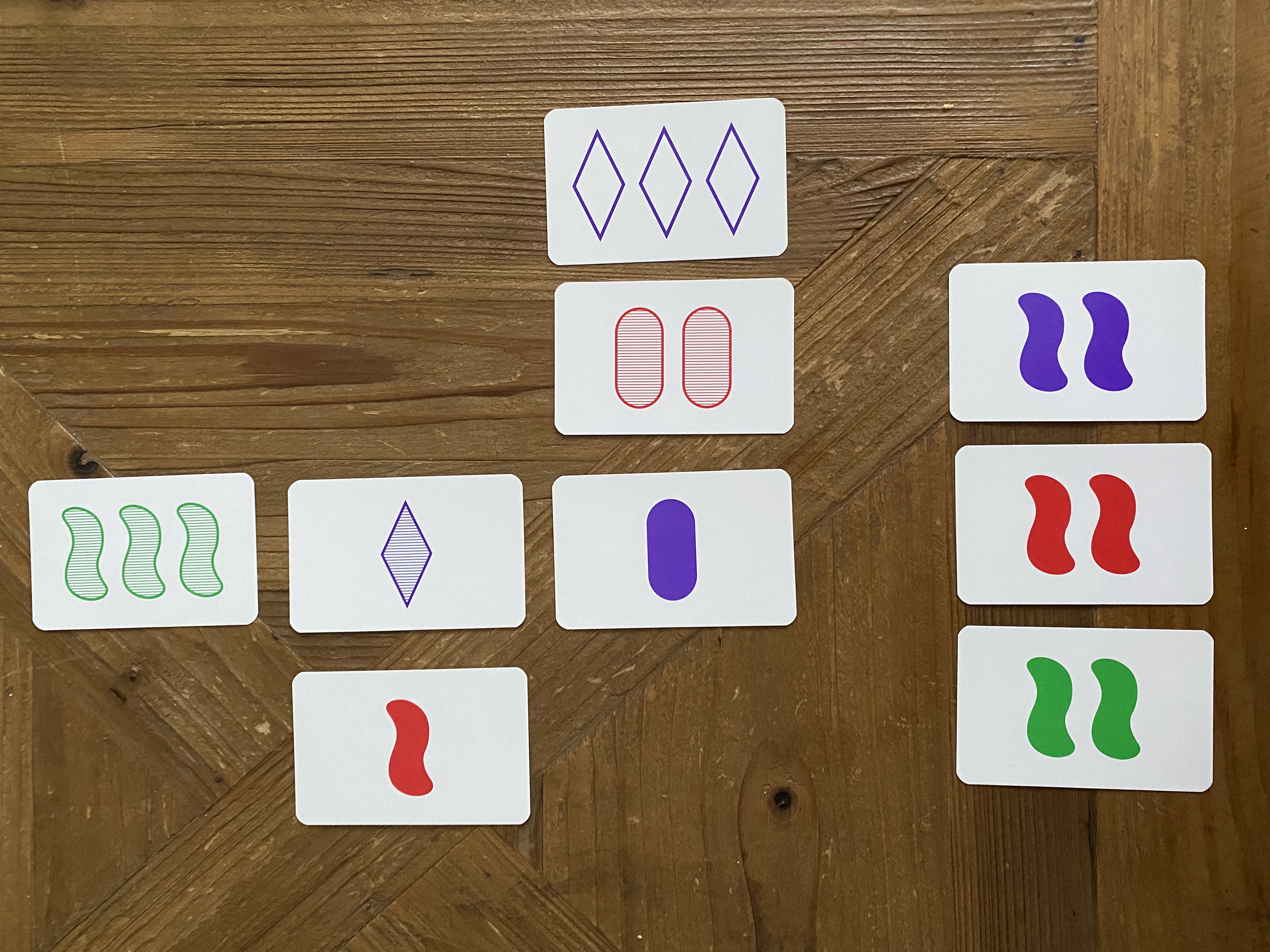
Pattern Recognition Game, consisting of cards with four characteristics, each with three attributes. There are 81 unique cards in total. The characteristics are shape, color, quantity, and filling. Each player will try to claim the most SETs. A SET is a group of three cards where each characteristic is either the same on all cards or different on each one.
Twelve cards will be placed in the center of the table, and all players will simultaneously search for SETs.
Technical specifications:
- Manufacturer: Devir
- Age: 8 years and up
- Number of players: 2 to 10 players
ROBOCODING
Robocoding is a game that focuses on coordinates, sequencing, logical thinking, and problem-solving. Turn the wheels and position the robots on the board. Learn coordinates and the first concepts of coding. Discover that any challenge can be broken down into a sequence of small steps. Create these movement sequences cooperatively with your peers, and you'll realize that there are different ways to reach the same goal.
Technical specifications:
- Manufacturer: Akros
- Age: 4 to 8 years
- Number of players: 1 to 4 players
Pedagogical guide provided by the manufacturer
ALGORACING
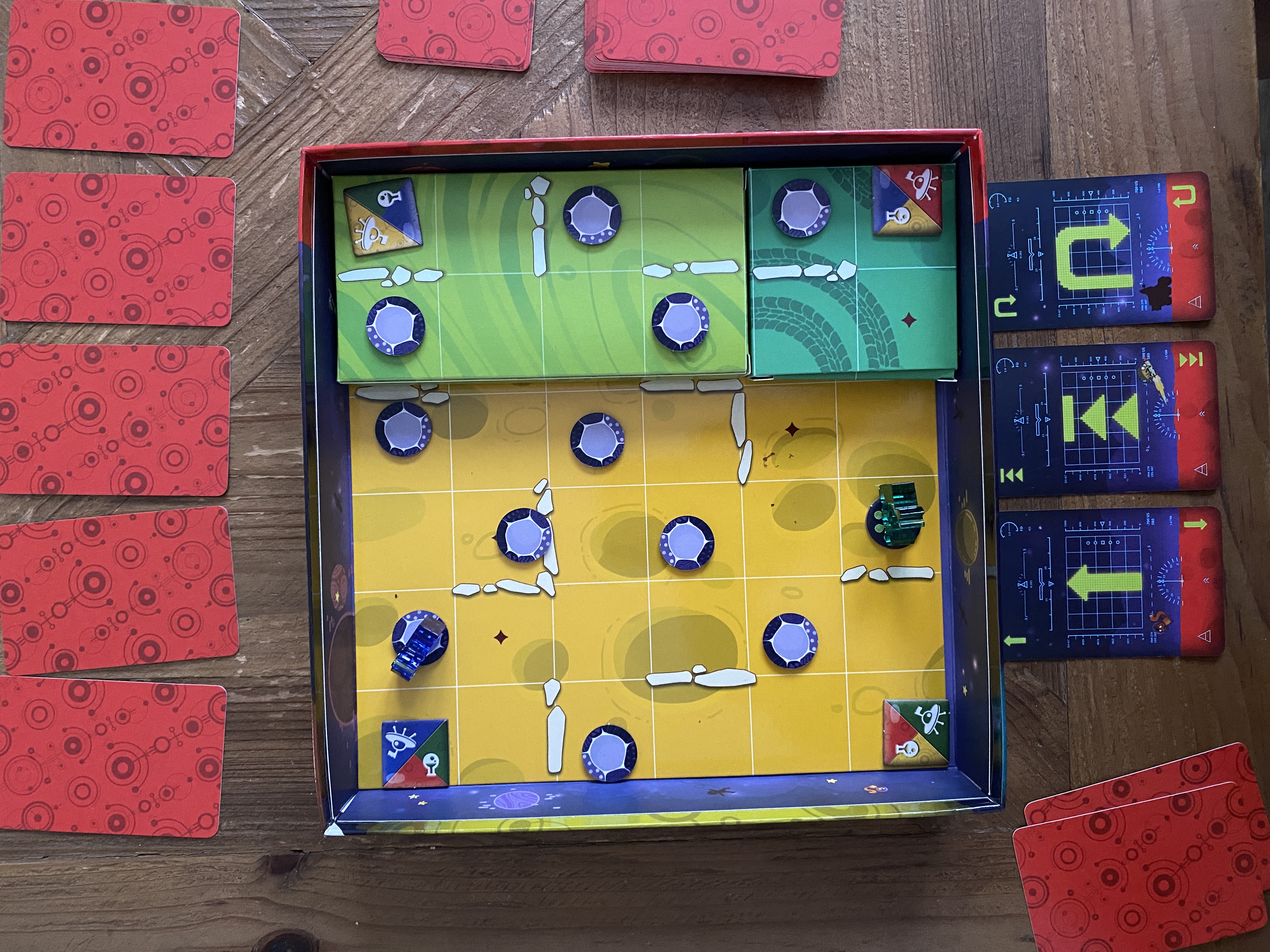
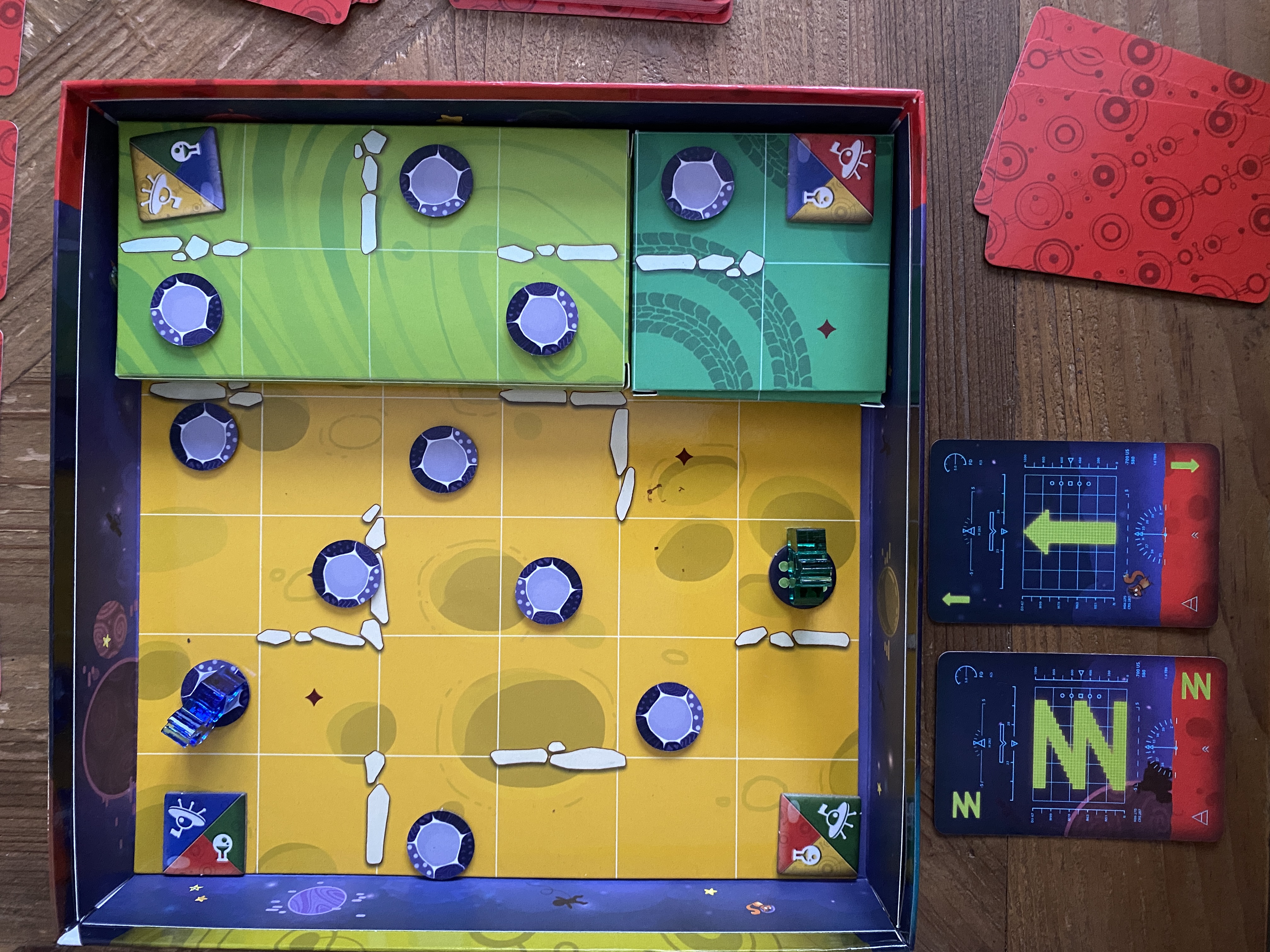
In this game, you become the captain of a team of special Rovers searching for life on a mysterious planet. You must carefully program the movements of your Rovers using clever algorithms to collect life samples from the planet's surface.
There are two different levels, depending on the children's age and experience.
Technical specifications:
Manufacturer: Falomir
Age: 6 years and up
Number of players: 2 to 4 players